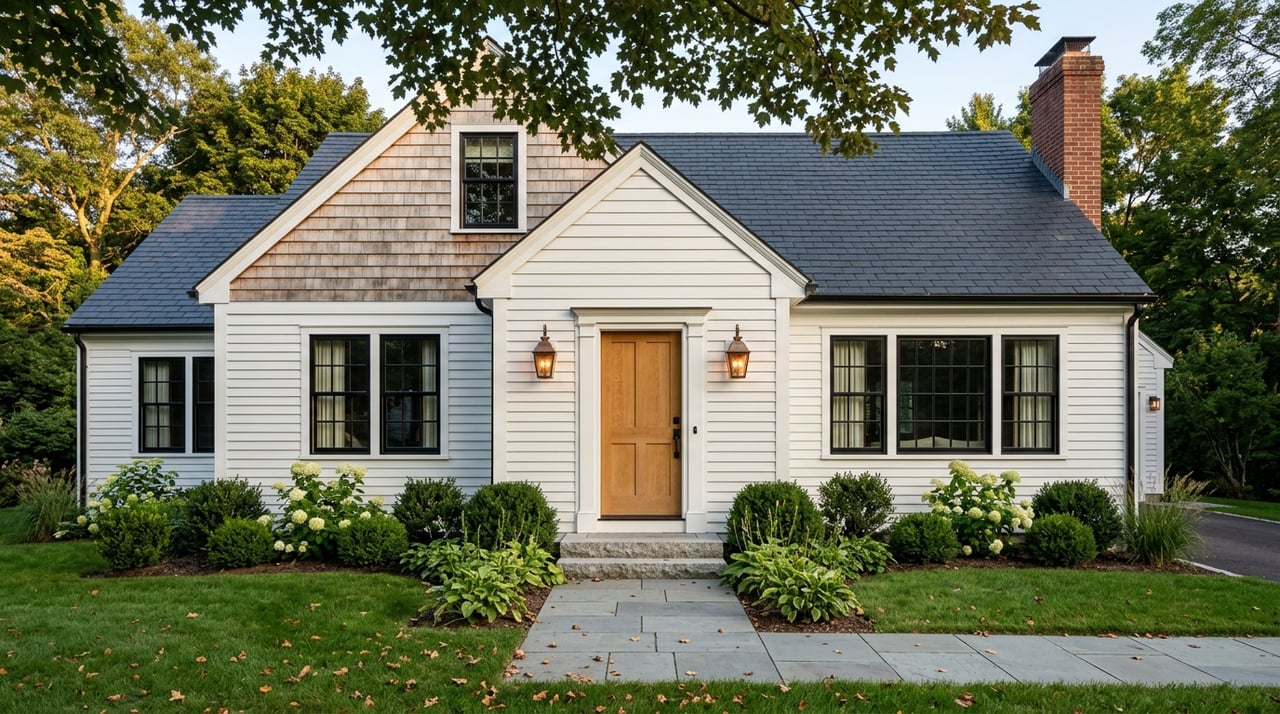
Buying a First Home in Wellesley: What to Know
April 16, 2026
April 16, 2026
Buying your first home in Wellesley can feel exciting and intimidating at the same time. You may love the idea of living in a well-connected suburb west of Boston, but the prices, competition, and financing details can make the path feel unclear. The good news is that with the right plan, you can turn a complicated process into a smart, step-by-step decision. Let’s dive in.
If you are buying your first home in Wellesley, the first step is being honest about the market. Wellesley is a small, primarily residential suburb about 15 miles west of Boston, with a population of 29,550 according to the town’s community profile. It also has strong transportation access, which is one reason many buyers keep it on their shortlist.
Price is the biggest reality check for most first-time buyers. Realtor.com’s Wellesley market overview showed 56 active listings in March 2026, a median listing price of $2,395,000, and median days on market of 32. The Massachusetts Association of Realtors report for July 2025 showed a 12-month median sales price of $2,175,000 for single-family homes and $1,550,000 for condos, with tighter inventory on the single-family side.
The practical takeaway is simple: Wellesley is a high-price, low-inventory market. For many first-time buyers, condos may be the lower-entry option, but they are still expensive by typical first-home standards. That means your plan has to be grounded in both your budget and your flexibility.
One of the best ways to approach a first purchase in Wellesley is to work backward from your goal. Instead of starting with online listings, start with your target move date, your monthly comfort level, and the kind of daily life you want to support.
This reverse-roadmap approach matters because Wellesley is not a market where most buyers can casually browse and figure it out later. Tight inventory and high price points reward preparation. If you know your timing, financing range, and commute priorities before you start touring, you can move faster and with more confidence.
Before you look at homes, define what you can truly afford each month. The Consumer Financial Protection Bureau recommends checking your credit early, tracking your spending, and preparing key paperwork before you shop. That gives you a more accurate picture of what a lender may approve and what actually feels sustainable for your life.
Your monthly payment should include more than principal and interest. In Wellesley, property taxes are a meaningful part of the equation. The town’s FY2026 residential tax rate is $10.17 per $1,000 of assessed value, which works out to about $10,170 per year per $1 million of assessed value.
That means a home assessed around $2 million would carry roughly $20,340 per year in property taxes before exemptions. When you translate that into a monthly budget, the tax line alone becomes a major planning item. This is why a payment-first strategy is often more useful than a price-first strategy.
A lot of first-time buyers focus heavily on the down payment and underestimate the cash needed beyond it. The CFPB says closing costs typically run about 2% to 5% of the purchase price, separate from your down payment, according to its homebuying guidance.
In a market like Wellesley, that adds up quickly. On a $2 million purchase, that rough range is about $40,000 to $100,000 in closing costs alone. You also want a reserve for moving, inspections, and any immediate repairs or updates.
Financing strategy is especially important in Wellesley because many homes are priced above standard conforming loan limits. The FHFA 2026 conforming loan limit list shows a one-unit conforming loan limit of $962,550 for Norfolk County. Since many Wellesley homes are priced well above that threshold, some buyers may need jumbo financing, a larger down payment, or a lower-priced property type.
That does not mean Wellesley is out of reach. It does mean you should understand early which lane fits you best. Depending on your finances, your options may include conventional financing, jumbo financing, FHA, or a statewide program that helps reduce the upfront burden.
If you are a first-time buyer, MassHousing homebuyer loans are worth reviewing early in the process. MassHousing says it offers affordable mortgage loans, down payment assistance of up to $30,000 in every city and town in Massachusetts, homebuyer education classes, and certain flexible income and credit score requirements.
MassHousing also offers MIPlus job-loss protection of up to six months and up to $4,000 per month for eligible borrowers. That kind of support can be especially valuable if you want more financial cushion in a high-cost market. The key is to explore eligibility before you are rushing to write offers.
In Wellesley, preapproval is not optional in practice. The CFPB explains that a preapproval letter helps sellers see you as a serious buyer, even though it is not a guaranteed loan offer. It also notes that preapproval letters typically expire in 30 to 60 days.
That timing matters. If you get preapproved too early, you may need to refresh it. If you wait too long, you may lose time on a home that fits.
A strong preapproval also helps you narrow your search. Instead of wondering whether a listing might work, you can focus on homes that align with your true payment range and financing structure.
Many first-time buyers make the mistake of choosing the first lender they speak with. The CFPB recommends comparing multiple Loan Estimates so you can evaluate loan amount, interest rate, monthly payment, upfront costs, cash to close, and whether a lender can meet your closing timeline.
This is one of the most important parts of a smart buying strategy. In a high-cost market, small differences in fees, structure, or rate can have a large impact on your cash needs and long-term payment. Comparing several Loan Estimates can also give you leverage when negotiating with lenders.
Wellesley’s location is a major reason buyers consider it, so your commute should be part of your home search from day one. The town says Wellesley Square, Wellesley Hills, and Wellesley Farms connect to the MBTA Framingham/Worcester line, and the town provides parking for commuter-rail riders. The town also notes regional transportation connections beyond commuter rail.
For many buyers, that access is a major quality-of-life factor. Wellesley’s hazard mitigation plan describes the town as about 20 minutes from downtown Boston by commuter rail and notes its road and rail access. If you expect to commute regularly, travel time and station access can shape your decision as much as the home itself.
This is where first-time buyers often benefit from a clear framework. You may not be choosing between a perfect home and an imperfect one. You may be choosing between a smaller home closer to rail access, a condo with a lower entry price, or a larger home farther from your ideal route.
That is why your search criteria should connect three things at once:
When those filters are clear, it becomes easier to spot the right fit and avoid wasting time on homes that do not match your real priorities.
Speed matters in a market with limited inventory. The MAR report showed 1.9 months of single-family inventory in Wellesley, while Realtor.com showed 56 active listings and 32 median days on market in March 2026. That does not mean every home sells instantly, but it does mean good-fit listings may not sit around while buyers sort out financing or decision-making.
You do not need to rush emotionally. You do need to be operationally ready. That means your financing is lined up, your must-haves are defined, and your decision process is calm and clear before you step into the right property.
Even in a competitive market, protections still matter. The CFPB says it is wise to make an offer contingent on financing and a satisfactory inspection in its guidance on finding the right home. Those contingencies help protect you if your loan falls through or the property has significant issues.
In a high-price market, mistakes get expensive fast. A careful offer strategy can help you stay competitive while still keeping essential safeguards in place where possible. This is one of the biggest reasons first-time buyers benefit from a plan instead of relying on pressure or guesswork.
Once your offer is accepted, the pace usually picks up. The CFPB recommends continuing to review lender terms and researching closing-service providers early, since timelines can move quickly once you are under contract. It also notes you can request revised Loan Estimates if a quote does not match what you expected.
This is the stage where preparation pays off. If you already understand your lender options, closing costs, and timeline, you are much less likely to feel overwhelmed. A smooth closing usually starts long before the accepted offer.
If you want to buy your first home in Wellesley, the smartest move is to build a strategy before you fall in love with a listing. Start with your end goal, work backward from your move date, and define the payment, financing, and commute framework that makes sense for your life. In a market like this, preparation is not just helpful. It is your advantage.
If you want a calm, research-driven plan tailored to your budget, timing, and tradeoffs, Kelly Kovacs can help you build your next steps with clarity. Schedule a free consultation.
Stay up to date on the latest real estate trends.

Real estate is about more than just a transaction—it's about your future. Whether you're buying, selling, or investing, let's work together to make your vision a reality.