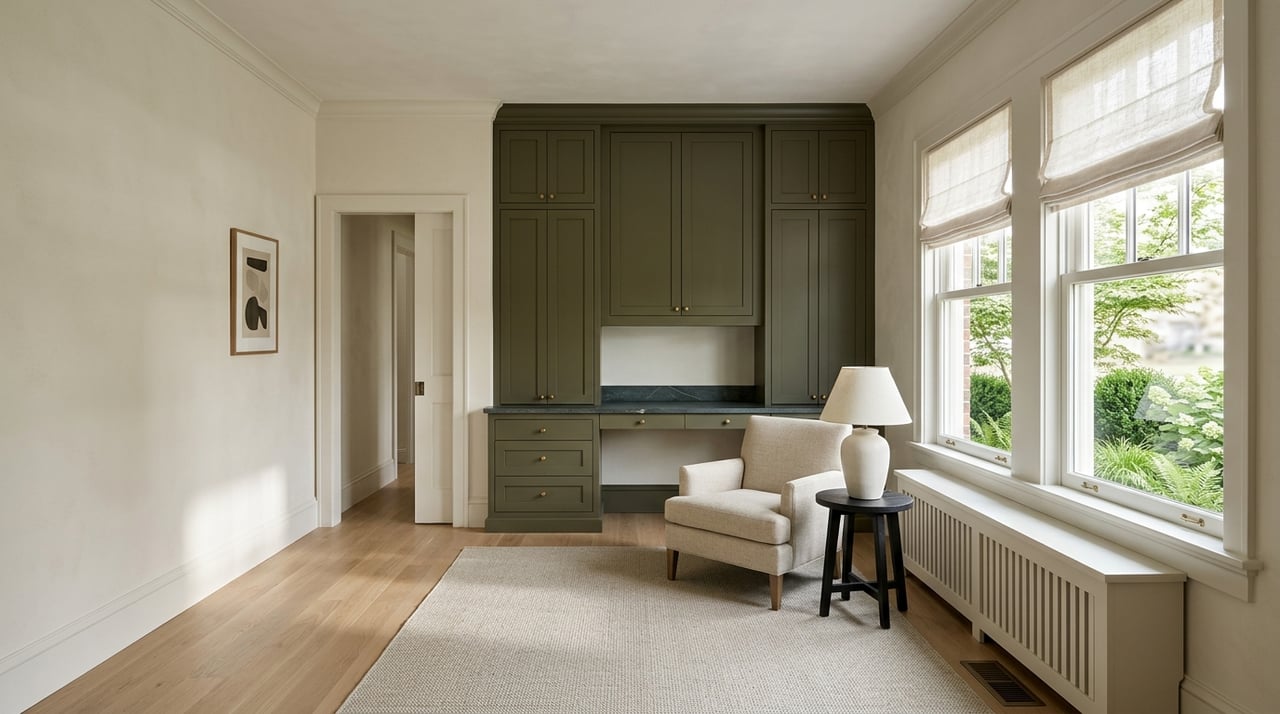
Planning A Flexible Forever Home In Lincoln MA
May 28, 2026
May 28, 2026
If you are planning to stay in your next home for a long time, the wrong question is often, “Is this house perfect today?” In Lincoln, a better question is whether the home can adapt with you over time. Whether you are thinking about aging in place, remote work, hosting family, or creating more flexibility later, the real opportunity is to buy with a plan. Let’s dive in.
Lincoln is a small Greater Boston town with an estimated 6,996 residents in 2024, and its housing profile points to a mix of life stages. Census data show that 24.3% of residents are under 18 and 21.7% are age 65 and over, which helps explain why adaptable homes can matter so much here.
The town also has a high median owner-occupied home value of $1,208,200. When you are buying at that price point, it makes sense to think beyond your immediate needs and look at how the property could serve you five, ten, or twenty years from now.
Lincoln’s physical character also shapes that decision. The town describes itself as deeply influenced by conservation and working-land protection, with about 35% of the town under permanent conservation deeds or restrictions, roughly 1,600 acres of municipal conservation land, and about 80 miles of trails across conservation land and private property.
That preserved landscape is part of what makes Lincoln so distinctive. It also means that usable flexibility and apparent space are not always the same thing.
Before you focus on finishes, start with your likely next chapters. Kelly Kovacs’ Reverse Roadmap approach fits this well because it starts with your end goal and works backward into the search.
For a flexible forever home, your end goal may include:
These are not just design preferences. In many Lincoln homes, especially older ones, layout flexibility may matter more than total square footage.
One of the easiest mistakes in Lincoln is assuming a large lot automatically creates room for future expansion. It does not.
A public assessor example at 30 Beaver Pond Road shows why. The property is a 9.8-acre single-family parcel, but the assessor card breaks the land into prime site, excess acres, and a wetland or undeveloped component. That is a useful reminder that total acreage is not the same as practical building area.
In other words, a property can look expansive on paper while offering more limited options for additions, detached structures, or other future changes. If flexibility is part of your plan, the lot needs to be tested, not just admired.
In Lincoln’s R-1 Single-Family Residence District, the baseline standards are strict. The minimum lot area is 80,000 square feet, frontage is 120 feet, minimum lot width through the principal building is 250 feet, and the minimum front, side, and rear yards are 50 feet.
For lots built after April 5, 2003, height is limited to 36 feet or 2.5 stories, whichever is less. These rules matter because even if a house feels like it has room to grow, the legal building envelope may be much tighter than you expect.
That is why a smart Lincoln home search is not only about what you see today. It is also about what the zoning rules allow tomorrow.
Lincoln has many homes where character and adaptability go hand in hand. A public assessor example at 37 Lincoln Road shows an antique clapboard house built around 1740 with 1,986 square feet, 3 bedrooms, 1 bath, and septic on a 1.3-acre parcel.
A home like that may not win on turnkey layout alone. But for the right buyer, the value may be in thoughtful interior reconfiguration rather than chasing a much larger new footprint.
This is where a design-led review matters. If you can identify where a den becomes a bedroom, where a first-floor room gains long-term function, or where circulation improves daily living, you may see value that a surface-level search misses.
Older lots in Lincoln can be useful, but they can also be more complex. Under Lincoln’s zoning bylaw, a single-family or two-family lot established before June 6, 1955, and continuously existing without alteration may retain nonconforming protection.
The bylaw also says a single-family or two-family structure on a nonconforming lot can be reconstructed, altered, or repaired as long as the work does not increase the nonconformity. If the proposed work goes beyond routine repair, a special permit standard through the Board of Appeals may apply.
For you as a buyer, the takeaway is simple. An older lot may support meaningful changes, but you need to understand exactly what kind of changes are allowed before you count on future flexibility.
Another Lincoln rule that can surprise buyers is the site-plan threshold for larger projects. Proposed above-grade alterations, extensions, reconstructions, or renovations that would leave the property with more than 4,000 square feet or 8% of lot area, whichever is greater, or more than 6,500 square feet total, require Planning Board site-plan review before a building permit is issued.
The bylaw also states that no site alteration or development work should happen on undeveloped or vacant lots before Planning Board approval. This does not mean a project cannot happen, but it does mean that bigger plans may involve more process than buyers expect.
That is especially important if you are comparing a home that works now versus one that only works if you can expand it later. A calm, research-first plan can help you weigh that risk clearly.
In Lincoln, open land does not always equal easy expansion. The Conservation Commission says any activity proposed within the 100-year flood zone, within 100 feet of wetlands or intermittent streams, or within 200 feet of perennial streams must be reviewed.
That means wetlands and buffer areas can become a major filter when you evaluate a forever-home property. The practical question is not just, “Is there land?” but “Is there buildable, approvable land?”
Septic also matters. Public assessor examples in Lincoln include homes on septic, and Lincoln’s current accessory-apartment rules require Board of Health sewage certification in the relevant context. If your long-term plan includes more living area or an accessory unit, wastewater capacity may be part of the conversation.
Accessory dwelling units are one of the clearest tools for creating flexibility. Massachusetts regulations now allow protected-use ADUs under 900 square feet by right in single-family zoning districts, with those regulations effective January 31, 2025.
Lincoln’s planning page says the town is proposing a bylaw amendment to conform local rules to state law while keeping current accessory-apartment rules for units larger than 900 square feet up to 1,200 square feet. Lincoln’s current bylaw text also shows an accessory-apartment section that allows one accessory dwelling unit within a single-family dwelling by building permit, while detached accessory apartments require a special permit.
The current local framework also includes requirements such as at least 40,000 square feet of lot area, owner occupancy, no separate conveyance, site plans showing setbacks and parking, Board of Health sewage certification, and one parking space. If an ADU is part of your forever-home strategy, the best move is to test the idea against the exact property early.
In Lincoln, flexibility is not always created through one massive renovation. Sometimes it happens through staged improvements over time.
The public assessor card for 30 Beaver Pond Road records a long history of upgrades including kitchen, roof, barn, solar, pool, renovation, and addition work. That does not make phased improvement a townwide rule, but it is a useful example of how some Lincoln properties evolve gradually.
For many buyers, that is the more realistic forever-home path. You buy the right bones, confirm the lot and regulatory framework, and improve the property in steps as your needs change.
If you are evaluating homes in Lincoln, use a simple framework before you fall in love with a floor plan.
A forever home in Lincoln is rarely about finding a property that answers every need on day one. More often, it is about finding a home with the right combination of layout potential, lot reality, and regulatory room to evolve.
That is why a strategic search matters here. When you evaluate homes through your long-term goals, then test those goals against zoning, wetlands review, septic considerations, and public property records, you make decisions with more clarity and less guesswork.
In a town defined by conservation, character, and careful land use, that kind of planning can help you buy not just for today, but for your next chapter too.
If you want help pressure-testing a Lincoln property through a long-term lens, Kelly Kovacs can help you build a research-backed plan around layout potential, lot constraints, and your real end goals.
Stay up to date on the latest real estate trends.
Real estate is about more than just a transaction—it's about your future. Whether you're buying, selling, or investing, let's work together to make your vision a reality.